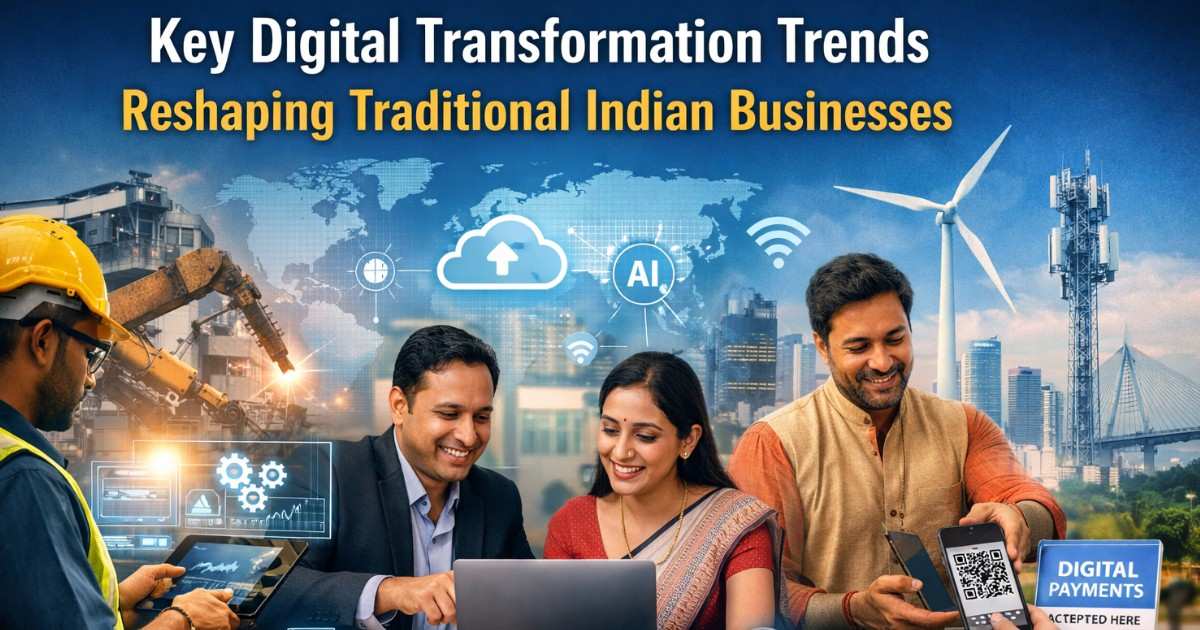
Key Digital Transformation Trends Reshaping Traditional Indian Businesses
India’s traditional business sectors are in the midst of a decisive transformation as digital technologies reshape how enterprises operate, compete, and grow. From family-owned manufacturing units and retail chains to legacy service providers, Indian businesses are increasingly embracing digital tools not as optional upgrades, but as essential drivers of resilience and relevance in a rapidly evolving economy.
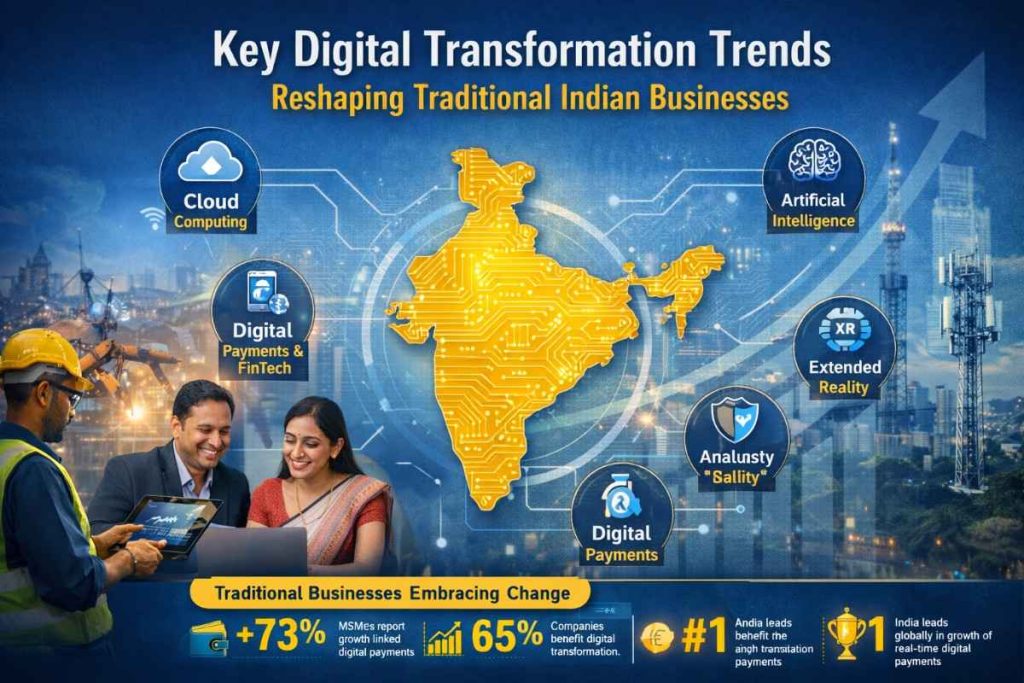
One of the most significant shifts underway is the move toward cloud-based infrastructure. Traditional enterprises that once relied heavily on physical servers and fragmented IT systems are transitioning to cloud platforms that offer flexibility, scalability, and cost efficiency. This shift has enabled companies to modernize operations, support remote and hybrid workforces, and accelerate the launch of digital services. Cloud adoption has also reduced dependence on heavy capital expenditure, allowing even mid-sized and small businesses to access enterprise-grade technology previously out of reach.
Artificial intelligence and advanced analytics are emerging as transformative forces across sectors. Indian companies are increasingly deploying AI to automate routine processes, analyze consumer behavior, forecast demand, and improve operational efficiency. What was once intuition-driven decision-making is now guided by real-time data insights. From predictive maintenance in factories to personalized recommendations in retail and banking, AI is becoming embedded in everyday business functions, enhancing productivity and improving customer engagement.
The rapid expansion of digital payments has fundamentally altered the commercial ecosystem. Unified Payments Interface and mobile-based transactions have enabled businesses of all sizes to participate in the formal digital economy. Traditional retailers, wholesalers, and service providers are now operating in a largely cash-light environment, improving transparency and efficiency. This shift has also opened access to digital credit, inventory management tools, and financial services, particularly benefiting micro and small enterprises that form the backbone of India’s economy.
Another defining trend is the rise of data-driven business strategies. Indian enterprises are increasingly recognizing data as a strategic asset. By leveraging customer data, supply chain metrics, and market intelligence, businesses are refining pricing models, optimizing logistics, and improving customer retention. The ability to respond quickly to changing market conditions through data analytics has become a key competitive differentiator, especially in sectors facing intense domestic and global competition.
The integration of the Internet of Things is further transforming traditional industries such as manufacturing, logistics, and agriculture. Connected devices and sensors are enabling real-time monitoring of machinery, inventory, and environmental conditions. This has led to reduced downtime, better quality control, and improved resource utilization. For many traditional businesses, IoT adoption marks a transition from reactive operations to predictive and preventive management.
Customer experience is also being reshaped by digital tools. Businesses are adopting omnichannel strategies that integrate physical stores with digital platforms, ensuring seamless interactions across touchpoints. Technologies such as augmented reality, virtual showrooms, and digital customer support systems are enhancing engagement and building stronger brand loyalty. Traditional businesses are increasingly aware that customer expectations are now shaped by digital-native companies, making experience innovation a business necessity.
As digital adoption deepens, cybersecurity has become a central concern. With growing reliance on digital platforms and data systems, businesses are prioritizing security frameworks to protect sensitive information and maintain customer trust. Investments in cybersecurity infrastructure, employee training, and compliance measures are now viewed as essential components of long-term digital strategies rather than technical add-ons.
Government initiatives and a thriving startup ecosystem have further accelerated this transformation. Policy frameworks promoting digital inclusion, technology adoption, and innovation have created a conducive environment for traditional businesses to modernize. Collaboration between legacy enterprises and technology startups is becoming more common, enabling faster adoption of digital solutions and fostering a culture of innovation across industries.
The cumulative impact of these trends is a fundamental reshaping of India’s traditional business landscape. Digital transformation is no longer limited to urban or technology-driven sectors; it is spreading across geographies and industries, redefining how value is created and delivered. Businesses that embrace this shift are gaining efficiency, scalability, and resilience, while those that delay risk losing relevance in an increasingly digital economy.
As India advances toward a more connected and technology-driven future, digital transformation stands as a defining force shaping the next chapter of its economic growth. For traditional Indian businesses, the journey from legacy operations to digital maturity is not merely about adopting new tools, but about reimagining business models to thrive in a digitally empowered era.
Add startupnewswire.in as preferred source on google – Click here
Last Updated on Friday, January 23, 2026 9:30 am by Startup Newswire Team
About The Author