
Pfizer INDovation Grants ₹8 Crore+ to 14 Healthtech Startups to Boost Healthcare Innovation in India
Why This Announcement Matters Today
India’s healthcare system is under rapid transformation.
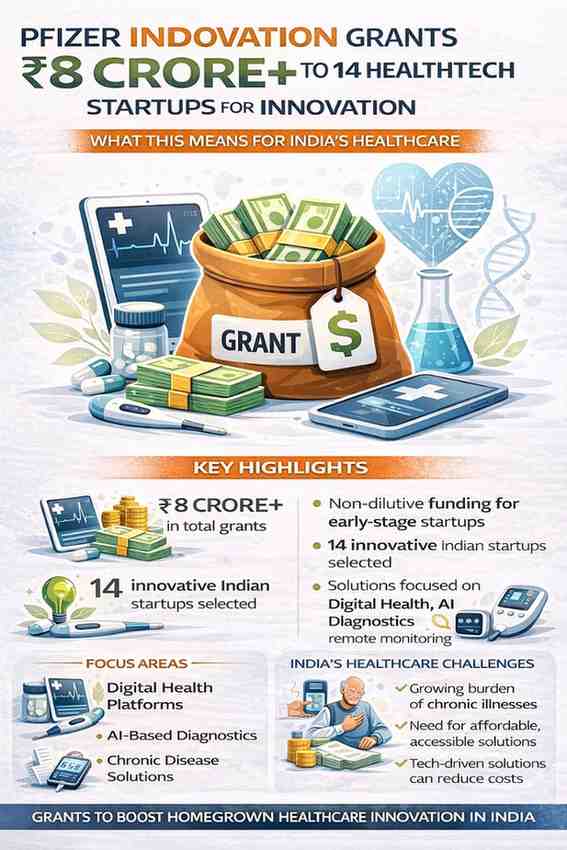
From digital diagnostics to AI-powered screening tools, healthtech startups are playing a key role in improving access and affordability. In a major boost to this ecosystem, Pfizer has awarded over ₹8 crore in grants to 14 Indian healthtech startups under its INDovation programme.
The funding aims to support early-stage innovations that address real-world healthcare challenges in India. At a time when technology is reshaping medical delivery, this move signals growing corporate support for homegrown innovation.
For startups, investors and healthcare professionals, the development highlights how private sector partnerships are accelerating medical progress.
What Is Pfizer INDovation?
Pfizer INDovation is an initiative designed to identify and support promising Indian healthtech startups working on innovative healthcare solutions.
The programme focuses on:
- Digital health platforms
- Diagnostic innovation
- Patient engagement tools
- Disease management technologies
- Affordable healthcare solutions
By providing grants and mentorship, the initiative aims to bridge the gap between early-stage innovation and real-world healthcare deployment.
₹8 Crore+ Grant: Key Highlights
Under the latest edition of the programme:
- 14 healthtech startups have been selected
- Total grant support exceeds ₹8 crore
- Funding is aimed at product development and scaling
The selected startups represent diverse areas of healthcare technology, including chronic disease management, remote monitoring and digital health solutions.
The grant is non-dilutive, meaning startups receive funding without giving up equity.
Why Corporate Grants Matter for Startups
Early-stage startups often struggle with:
- Limited funding access
- High research costs
- Regulatory compliance expenses
- Market validation challenges
Corporate grants like INDovation provide:
- Financial support
- Industry mentorship
- Validation from an established global company
- Access to healthcare networks
This combination can significantly improve a startup’s growth trajectory.
Focus Areas of the Selected Startups
While specific startup names and technologies may vary, the broad themes include:
1. Digital Health Platforms
Technology platforms that improve:
- Doctor-patient communication
- Appointment scheduling
- Health data management
Digital health solutions are expanding rapidly in India due to smartphone penetration and improved internet access.
2. Chronic Disease Management
India faces rising cases of:
- Diabetes
- Cardiovascular disease
- Respiratory illnesses
Startups focusing on monitoring and long-term management of chronic conditions are gaining attention.
3. AI-Based Diagnostics
Artificial intelligence is increasingly used for:
- Early disease detection
- Medical imaging analysis
- Risk prediction
AI-driven diagnostics can reduce healthcare costs and improve early intervention rates.
4. Remote Patient Monitoring
Telemedicine and remote monitoring tools help extend healthcare access to:
- Rural populations
- Elderly patients
- Patients with mobility issues
These solutions became especially relevant during the pandemic years and continue to grow.
India’s Expanding Healthtech Ecosystem
India’s healthtech sector has seen strong momentum over the past few years.
Key drivers include:
- Rising healthcare awareness
- Digital adoption
- Government health missions
- Investor interest in health innovation
The COVID-19 pandemic accelerated digital health adoption across hospitals and clinics.
Healthtech startups are now addressing gaps in affordability, accessibility and efficiency.
Private Sector Role in Healthcare Innovation
Corporate support is becoming a major force in India’s innovation landscape.
Companies like Pfizer are investing in:
- Startup incubators
- Innovation grants
- Collaborative research
Such initiatives support innovation without waiting for traditional funding cycles.
They also help align startup solutions with real healthcare needs.
Why ₹8 Crore+ Funding Is Significant
While ₹8 crore may appear modest compared to large venture capital rounds, grant-based funding plays a unique role.
It allows startups to:
- Develop prototypes
- Conduct pilot testing
- Validate medical technologies
- Build regulatory compliance systems
For early-stage companies, this type of funding can be critical.
It reduces dependency on equity funding during initial development phases.
Healthcare Challenges in India
India continues to face major healthcare challenges, including:
- Urban-rural healthcare divide
- Shortage of specialists
- High out-of-pocket expenses
- Growing non-communicable diseases
Technology-driven solutions offer scalable ways to address these issues.
Healthtech startups often focus on:
- Low-cost innovation
- Data-driven care
- Remote access tools
Corporate support strengthens these efforts.
Startup Ecosystem and Innovation Culture
India is home to one of the world’s largest startup ecosystems.
The country has produced multiple unicorns across fintech, edtech and SaaS sectors.
Healthtech, however, requires:
- Clinical validation
- Regulatory compliance
- Strong partnerships
This makes corporate mentorship especially valuable.
Regulatory and Compliance Considerations
Healthcare innovation must follow strict guidelines.
Startups need to comply with:
- Medical device regulations
- Data privacy laws
- Clinical validation standards
Grant support combined with industry mentorship can help startups navigate complex compliance frameworks.
Long-Term Impact of INDovation Grants
The broader impact of such initiatives may include:
- Faster development of affordable solutions
- Improved healthcare delivery in underserved regions
- Stronger collaboration between pharma and startups
- Increased investor confidence in healthtech
Corporate-backed programmes also encourage innovation beyond metro cities.
What This Means for Investors
Investors closely watch grant-supported startups.
Corporate validation reduces risk perception.
If startups successfully scale, they may attract:
- Venture capital funding
- Strategic partnerships
- International expansion opportunities
India’s healthtech market continues to attract global interest.
Public Health and Innovation Alignment
India’s healthcare goals include:
- Universal health coverage
- Digital health record systems
- Preventive healthcare expansion
Startup-driven solutions align well with these objectives.
Technology helps:
- Improve efficiency
- Reduce costs
- Expand access
Corporate innovation programmes complement public health initiatives.
Why This Is a Positive Signal for the Sector
Pfizer’s decision to grant over ₹8 crore to 14 startups highlights confidence in Indian innovation.
It signals:
- Strong belief in homegrown technology
- Growing collaboration between pharma and startups
- Long-term commitment to healthcare improvement
Healthtech innovation is moving beyond pilot projects into structured support systems.
What Happens Next
The selected startups are expected to:
- Utilise funding for product development
- Conduct trials and validation
- Scale deployment
Industry observers will track:
- Product launches
- Clinical outcomes
- Partnerships formed
Successful outcomes could lead to expanded editions of the programme.
Bottom Line
Pfizer’s INDovation initiative awarding over ₹8 crore to 14 Indian healthtech startups marks a significant boost for the country’s healthcare innovation ecosystem.
In a sector that demands both scientific rigour and scalable technology, grant-based support can accelerate meaningful change.
For India’s healthtech landscape, this development reflects growing maturity, deeper corporate engagement and a shared goal of building accessible, affordable and technology-driven healthcare solutions.
As India strengthens its innovation ecosystem, collaborations like these will likely shape the future of digital healthcare in the country.
Disclaimer: The information presented in this article is intended for general informational purposes only. While every effort is made to ensure accuracy, completeness, and timeliness, data such as prices, market figures, government notifications, weather updates, holiday announcements, and public advisories are subject to change and may vary based on location and official revisions. Readers are strongly encouraged to verify details from relevant official sources before making financial, investment, career, travel, or personal decisions. This publication does not provide financial, investment, legal, or professional advice and shall not be held liable for any losses, damages, or actions taken in reliance on the information provided.
Financial Disclaimer: Markets and investment-related products are subject to risks and fluctuations. Readers should conduct their own research and consider consulting a qualified financial advisor before making any investment decisions.
Last Updated on Friday, February 13, 2026 11:34 am by Startup Newswire Team
About The Author