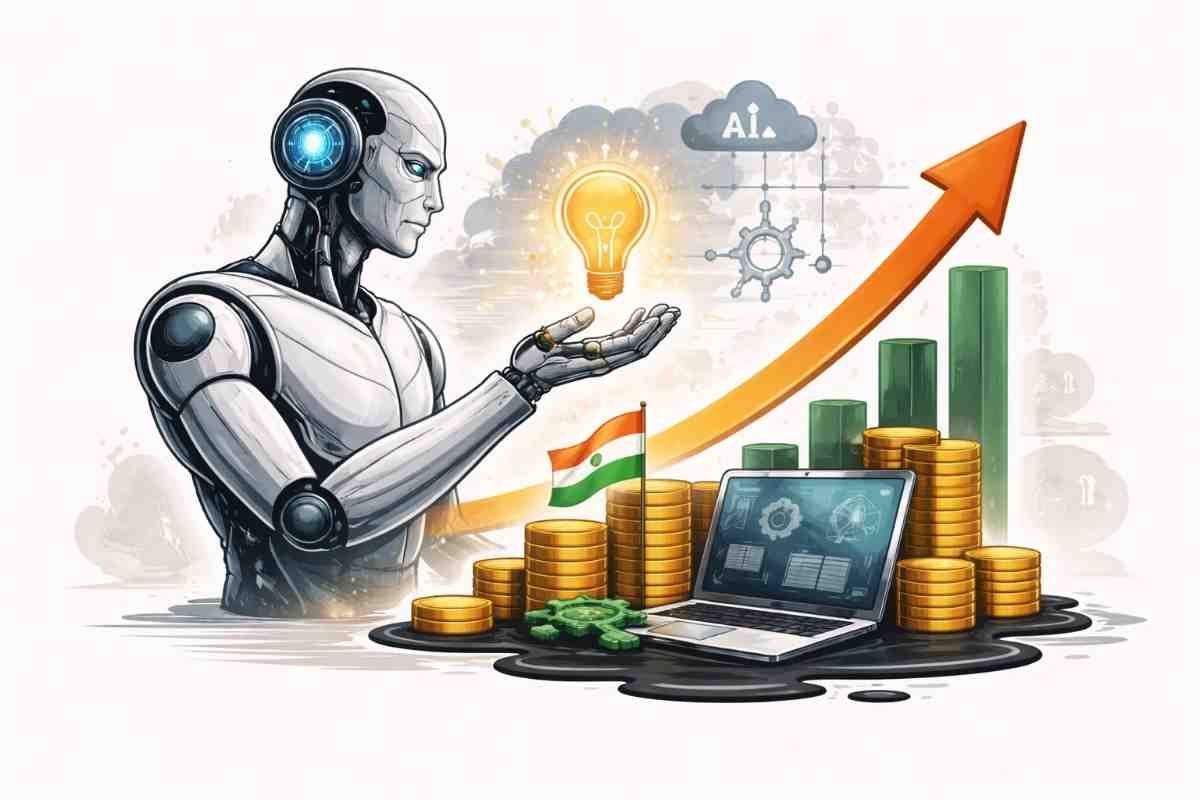
AI-Native Startups Dominate 2026 Funding as India Shifts Focus to Enterprise-Scale Innovation
Why AI-Native Startups Are Leading India’s 2026 Funding Story
India’s startup funding landscape in 2026 is being reshaped by one clear trend: AI-native startups are attracting the largest share of new capital.
From enterprise automation to AI-driven cybersecurity and healthcare platforms, investors are backing companies that build artificial intelligence at their core, not as an add-on feature.
This shift signals a major change in India’s innovation journey. The focus is no longer just on growth at any cost. Instead, the spotlight is on enterprise scale, profitability, and global competitiveness.
Here is a detailed look at how AI-native startups are dominating 2026 funding and what it means for India’s technology ecosystem.
What Are AI-Native Startups?
AI-native startups are companies that:
- Build products powered primarily by artificial intelligence
- Use machine learning models as core infrastructure
- Offer AI-driven services to businesses and enterprises
Unlike traditional startups that later add AI tools, these companies are designed around AI from day one.
They often operate in areas such as:
- Enterprise automation
- Predictive analytics
- AI cybersecurity
- Intelligent customer support
- Healthcare diagnostics
- Financial risk analysis
Funding Trends in 2026: A Clear AI Bias
Early data from 2026 shows that:
- A significant share of venture capital is flowing into AI-led companies
- Enterprise AI solutions are receiving higher valuations
- Seed and Series A rounds are closing faster for AI-native firms
Investors say AI startups offer:
- Faster scalability
- Recurring enterprise revenue
- Global expansion potential
Compared to consumer internet startups, AI companies are seen as more sustainable in the current funding environment.
Why Investors Prefer AI Enterprise Models
1. Strong Revenue Visibility
AI-native startups often work with:
- Large enterprises
- Banks
- Healthcare providers
- Manufacturing companies
These clients sign long-term contracts, which provide predictable revenue.
Investors prefer this stability over ad-driven or purely consumer-driven models.
2. High Global Demand
Enterprise AI tools are not limited to the Indian market.
Startups can sell:
- Automation tools
- Data analytics platforms
- AI security solutions
to clients in the US, Europe, Southeast Asia, and the Middle East.
This global potential increases investor confidence.
3. Cost Efficiency Through Automation
AI startups help enterprises reduce:
- Operational costs
- Human error
- Processing time
This direct business impact makes their solutions easier to sell.
India’s Push Toward Enterprise-Scale Innovation
India is moving beyond early-stage startup growth.
The focus in 2026 is on:
- Scaling to global markets
- Building deep tech capabilities
- Improving product reliability
- Creating export-ready technology
AI-native startups fit well into this strategy.
Government support for artificial intelligence research and digital infrastructure is also encouraging innovation.
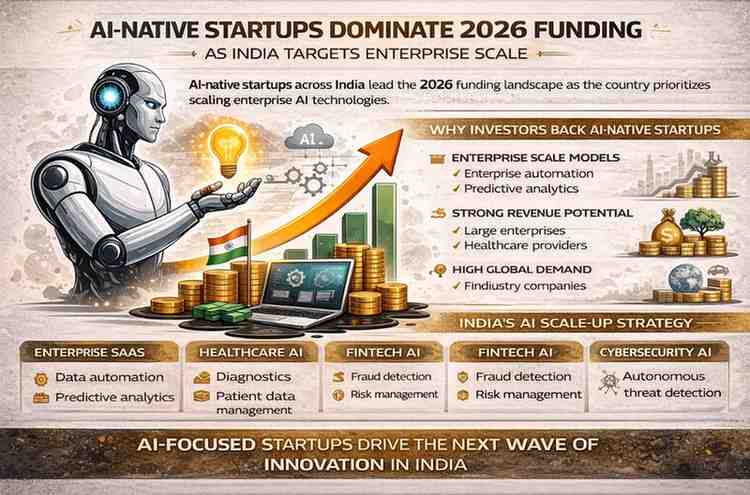
Sectors Attracting Maximum AI Funding
Enterprise SaaS
AI-driven SaaS platforms are leading funding rounds.
These platforms offer:
- Workflow automation
- AI-powered dashboards
- Data-driven decision support
Companies are willing to pay subscription fees for tools that improve efficiency.
Healthcare AI
AI tools for:
- Medical imaging analysis
- Remote diagnostics
- Patient data management
are seeing growing interest.
Healthcare digitisation in India is opening new opportunities.
Fintech AI
Financial institutions are adopting AI for:
- Fraud detection
- Risk scoring
- Customer behaviour analysis
Startups that improve financial security and compliance are attracting investor attention.
Cybersecurity and Data Protection
With growing digital adoption, cybersecurity has become critical.
AI-based threat detection and monitoring platforms are gaining strong traction.
How Indian AI Startups Are Competing Globally
Indian AI-native startups are no longer limited to domestic clients.
Many companies are:
- Setting up global offices
- Hiring international sales teams
- Building products for global compliance standards
The availability of skilled engineers and competitive costs gives India an advantage.
However, global competition remains intense.
Challenges Facing AI-Native Startups
Despite strong funding momentum, challenges remain.
1. Talent Competition
AI engineers and data scientists are in high demand.
Startups must compete with:
- Large tech companies
- Global firms
- Multinational corporations
Attracting and retaining skilled talent is critical.
2. Infrastructure Costs
Training large AI models requires:
- High computing power
- Cloud infrastructure
- Data storage
These costs can be significant, especially for early-stage startups.
3. Data Privacy Regulations
As AI solutions handle sensitive data, compliance with:
- Data protection laws
- Global privacy standards
is essential.
Failure to meet regulations can affect expansion plans.
Shift from Consumer to B2B Focus
In previous years, India saw heavy funding in:
- Food delivery
- E-commerce
- Consumer apps
In 2026, the funding narrative has shifted toward B2B AI solutions.
Investors are prioritising:
- Sustainable margins
- Enterprise contracts
- Long-term growth
This reflects a more mature funding environment.
Role of Government and Policy Support
India’s digital public infrastructure and AI strategy are creating a supportive environment.
Key developments include:
- Focus on AI research programs
- Encouragement of semiconductor development
- Startup support initiatives
Public-private partnerships are expected to play a key role in scaling AI innovation.
What This Means for India’s Startup Ecosystem
The rise of AI-native startups indicates a structural shift.
Key outcomes include:
- Increased deep-tech focus
- Higher emphasis on R&D
- Greater export potential
- Stronger enterprise partnerships
India is positioning itself not only as a services hub but also as a product innovation centre.
Will the AI Funding Boom Continue?
While AI is attracting strong capital flows in 2026, long-term sustainability depends on:
- Real revenue growth
- Product-market fit
- Responsible AI development
Investors are now more cautious than in previous funding cycles.
Companies that demonstrate strong fundamentals are likely to secure continued backing.
Impact on Jobs and Skill Development
The AI funding boom is also shaping the job market.
Demand is rising for:
- Machine learning engineers
- AI researchers
- Cloud architects
- Data analysts
Upskilling programs and university partnerships will play a key role in meeting this demand.
Final Word
AI-native startups are clearly dominating India’s funding landscape in 2026, especially in the enterprise technology space.
The shift reflects:
- Investor confidence in AI scalability
- Growing demand for automation
- India’s ambition to build global tech champions
As India targets enterprise scale and deep-tech leadership, AI startups are emerging as the backbone of the next phase of innovation.
The coming months will reveal whether this funding momentum translates into lasting global success.
Disclaimer: The information presented in this article is intended for general informational purposes only. While every effort is made to ensure accuracy, completeness, and timeliness, data such as prices, market figures, government notifications, weather updates, holiday announcements, and public advisories are subject to change and may vary based on location and official revisions. Readers are strongly encouraged to verify details from relevant official sources before making financial, investment, career, travel, or personal decisions. This publication does not provide financial, investment, legal, or professional advice and shall not be held liable for any losses, damages, or actions taken in reliance on the information provided.
Last Updated on Thursday, February 12, 2026 5:53 am by Startup Newswire Team
About The Author