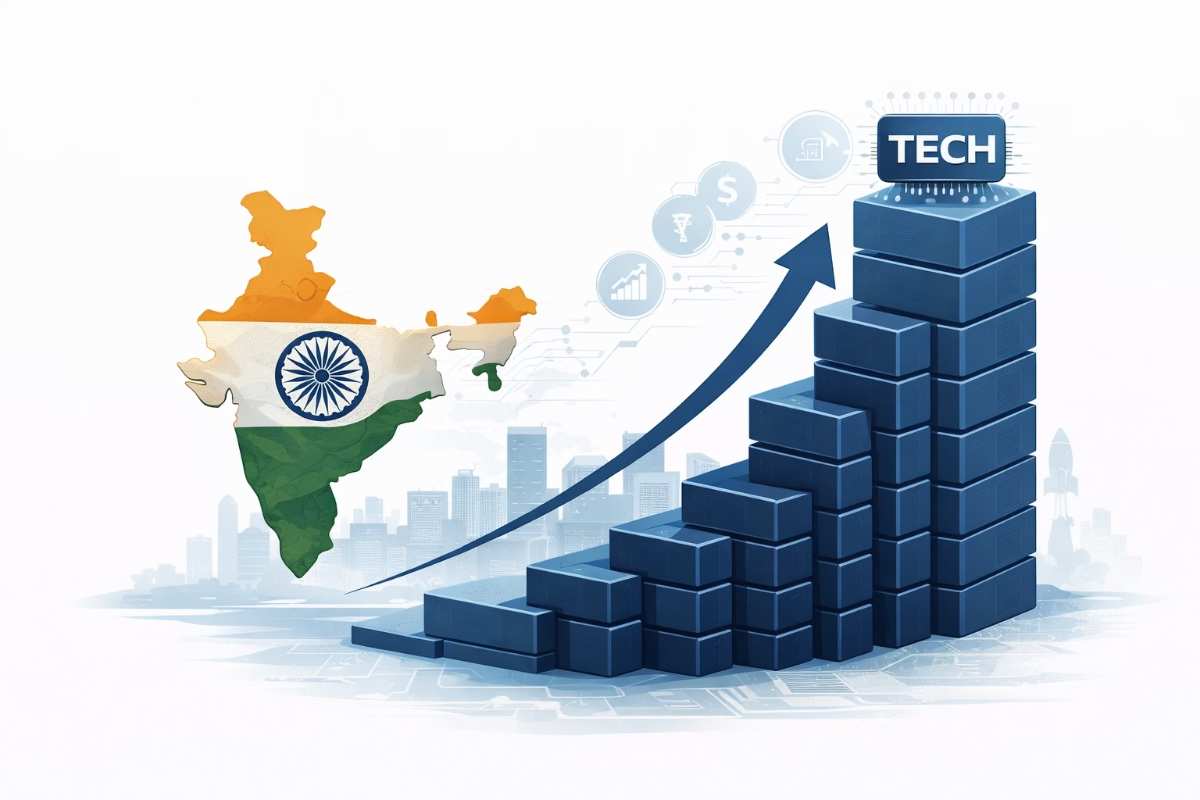
India Could Add $2 Trillion in Tech Market Cap Over the Next Decade, Says Accel Partner
Why This Projection Matters for India’s Economy
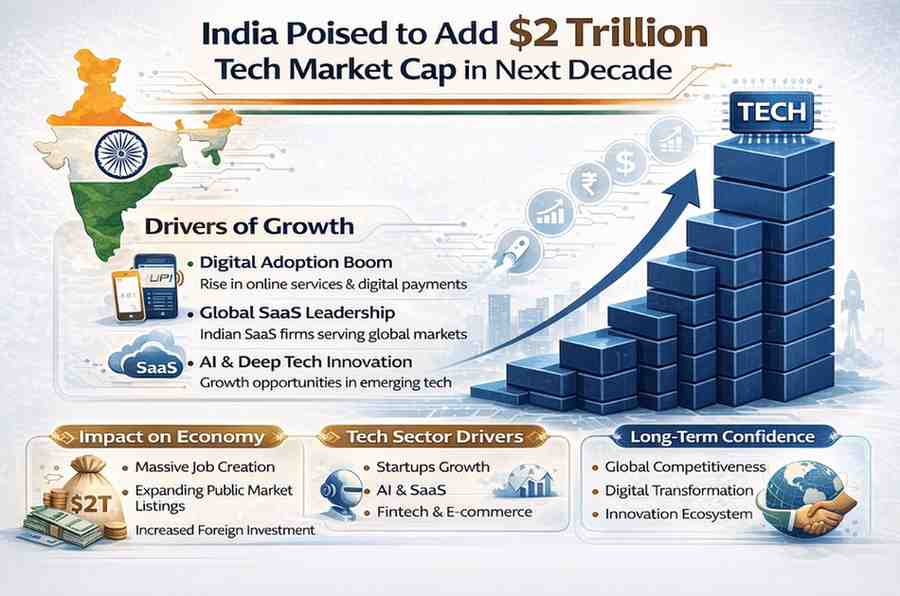
India’s technology sector could add $2 trillion in market capitalisation over the next 10 years, according to a partner at global venture capital firm Accel.
The projection highlights the scale of opportunity in India’s fast-growing digital economy. With strong startup activity, rising public market listings, and expanding global interest, the country’s tech sector is entering a new growth phase.
For investors, entrepreneurs, and policymakers, the forecast signals confidence in India’s long-term digital transformation story.
What the $2 Trillion Projection Means
Market capitalisation refers to the total value of publicly listed companies. A $2 trillion addition would represent a major expansion in India’s tech ecosystem.
India’s technology sector includes:
- Software services companies
- SaaS firms
- Fintech startups
- E-commerce platforms
- AI and deep-tech ventures
- Consumer internet businesses
Over the past decade, India has produced several listed tech companies and unicorn startups.
The next decade, according to Accel’s partner, could see even larger value creation driven by innovation and global scale.
India’s Current Tech Landscape
India is already one of the world’s largest technology hubs.
Key strengths include:
- A large pool of engineering talent
- Strong IT services exports
- A fast-growing startup ecosystem
- Expanding digital public infrastructure
Companies such as Infosys and Tata Consultancy Services have long contributed to India’s tech market capitalisation.
More recently, startups in SaaS, fintech, and e-commerce have entered public markets.
The addition of $2 trillion would mark a significant leap in overall valuation.
Drivers Behind the Growth Forecast
1. Digital Adoption Across Sectors
India’s digital penetration has increased sharply.
Unified Payments Interface (UPI) transactions have grown rapidly, demonstrating scale in fintech innovation.
Internet usage and smartphone adoption continue to expand in both urban and rural areas.
This digital foundation supports startup growth.
2. Global SaaS Leadership
India has emerged as a global hub for Software-as-a-Service (SaaS) startups.
Many Indian SaaS firms serve international customers from day one.
Recurring revenue models and global expansion strategies contribute to higher valuations.
3. Artificial Intelligence and Deep Tech
AI startups are attracting investor interest.
Applications in healthcare, education, agriculture, and enterprise software are expanding.
Deep-tech innovation can create high-value companies over time.
4. Domestic Consumption Growth
India’s large population supports demand for:
- E-commerce
- Digital payments
- Online education
- Entertainment platforms
Rising incomes and digital access boost revenue potential.
Role of Venture Capital Firms Like Accel
Accel has invested in several Indian startups over the years.
Venture capital firms provide:
- Early-stage funding
- Strategic guidance
- Global networks
Their outlook often reflects market trends and long-term investment strategies.
When a global VC firm projects large value creation, it signals confidence in market fundamentals.
Public Markets and IPO Momentum
India has seen multiple tech IPOs in recent years.
Public listings provide:
- Liquidity for investors
- Capital for expansion
- Market validation
As more startups mature and go public, total market capitalisation grows.
Sustained IPO activity over the next decade could significantly contribute to the projected $2 trillion increase.
Global Comparison
Globally, the US and China have dominated tech market capitalisation.
India’s tech ecosystem is smaller in comparison but growing steadily.
If India adds $2 trillion in tech market value, it would strengthen its position as a major global digital economy.
This would also increase India’s representation in global equity markets.
Challenges to Achieving the Target
While the projection is optimistic, several challenges remain:
- Regulatory clarity in emerging sectors
- Access to advanced computing infrastructure
- Global competition
- Talent retention
- Economic cycles affecting investor sentiment
Sustained growth will require stable policy support and innovation.
Impact on Employment and Innovation
Higher tech market capitalisation often reflects company growth.
This can lead to:
- Job creation in engineering and product roles
- Expansion of R&D centres
- Stronger innovation pipelines
India’s young workforce could benefit from technology sector expansion.
Skill development in AI, cybersecurity, and data science will be critical.
India’s Digital Public Infrastructure Advantage
India’s digital systems have created scalable frameworks.
Examples include:
- Aadhaar-based identity verification
- UPI payments ecosystem
- Open network initiatives
These platforms allow startups to build services at scale with lower friction.
Such infrastructure can accelerate value creation.
Long-Term Investor Confidence
The $2 trillion forecast suggests confidence in India’s macroeconomic stability and technology adoption.
Long-term investors typically look for:
- Market size
- Regulatory predictability
- Innovation capacity
- Global competitiveness
India’s combination of domestic scale and global ambition positions it well.
What This Means for Retail Investors
As the tech sector expands, retail investors may see more technology companies listed on Indian exchanges.
Greater sector depth could:
- Increase investment options
- Diversify portfolios
- Boost overall market activity
However, experts caution that market capitalisation growth depends on company performance and broader economic conditions.
Policy Support and Government Role
India’s government has promoted digital transformation through various initiatives.
Policy clarity in areas such as data protection and AI governance can further strengthen investor confidence.
Support for semiconductor manufacturing and R&D can also enhance long-term competitiveness.
Public-private collaboration will play a role in achieving large-scale value creation.
Outlook for the Next Decade
The next ten years will likely see:
- Continued digital penetration
- Growth in AI and SaaS startups
- Expansion of global market access
- Increased capital inflows
Whether India reaches the $2 trillion mark will depend on execution, innovation, and global market conditions.
Conclusion
India’s technology sector could add $2 trillion in market capitalisation over the next decade, according to an Accel partner.
The projection reflects strong confidence in India’s startup ecosystem, digital infrastructure, and talent base.
While challenges remain, the fundamentals appear supportive of long-term growth.
For entrepreneurs, investors, and policymakers, the message is clear: India’s tech story is entering a new chapter of scale and ambition.
If the sector continues on its current trajectory, India could significantly strengthen its position in the global technology economy over the next ten years.
Disclaimer: The information presented in this article is intended for general informational purposes only. While every effort is made to ensure accuracy, completeness, and timeliness, data such as prices, market figures, government notifications, weather updates, holiday announcements, and public advisories are subject to change and may vary based on location and official revisions. Readers are strongly encouraged to verify details from relevant official sources before making financial, investment, career, travel, or personal decisions. This publication does not provide financial, investment, legal, or professional advice and shall not be held liable for any losses, damages, or actions taken in reliance on the information provided.
Financial Disclaimer: Markets and investment-related products are subject to risks and fluctuations. Readers should conduct their own research and consider consulting a qualified financial advisor before making any investment decisions.
Last Updated on Thursday, February 19, 2026 6:21 am by Startup Newswire Team
About The Author