

Zomato Co-Founder’s Next Big Bet in Health Tech Signals Startup Shift
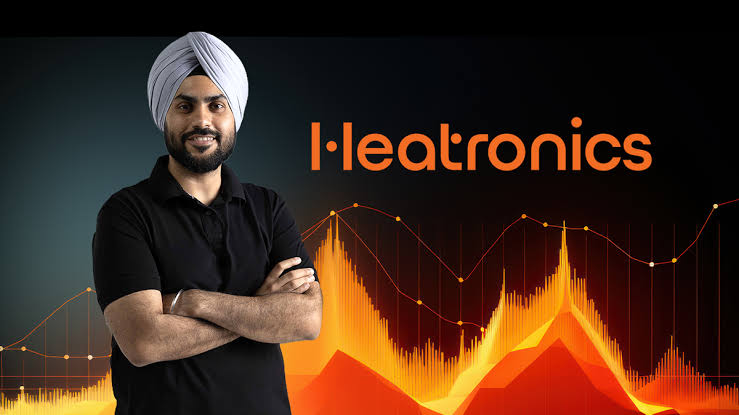
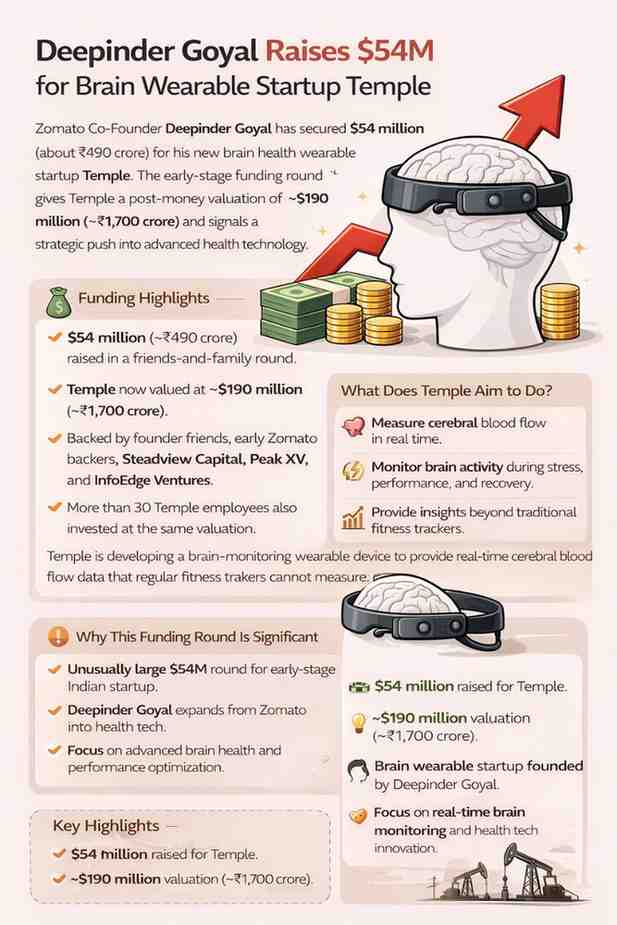
Indian tech entrepreneur Deepinder Goyal, best known as the co-founder and former CEO of Zomato, has raised $54 million (about ₹490 crore) for his new wearable startup, Temple. The funding comes at a post-money valuation of around $190 million (about ₹1,700 crore), marking a major milestone in India’s health-tech and wearable device space.
This news matters today because it marks a clear and strategic shift for one of India’s most prominent tech founders moving from quick-commerce and food tech into advanced health technology. Temple’s focus on brain monitoring and performance wearables places it at the intersection of neuroscience, sports tech, and life-science innovation, a rapidly growing global sector.
What Is Temple and Mission Behind the Startup?
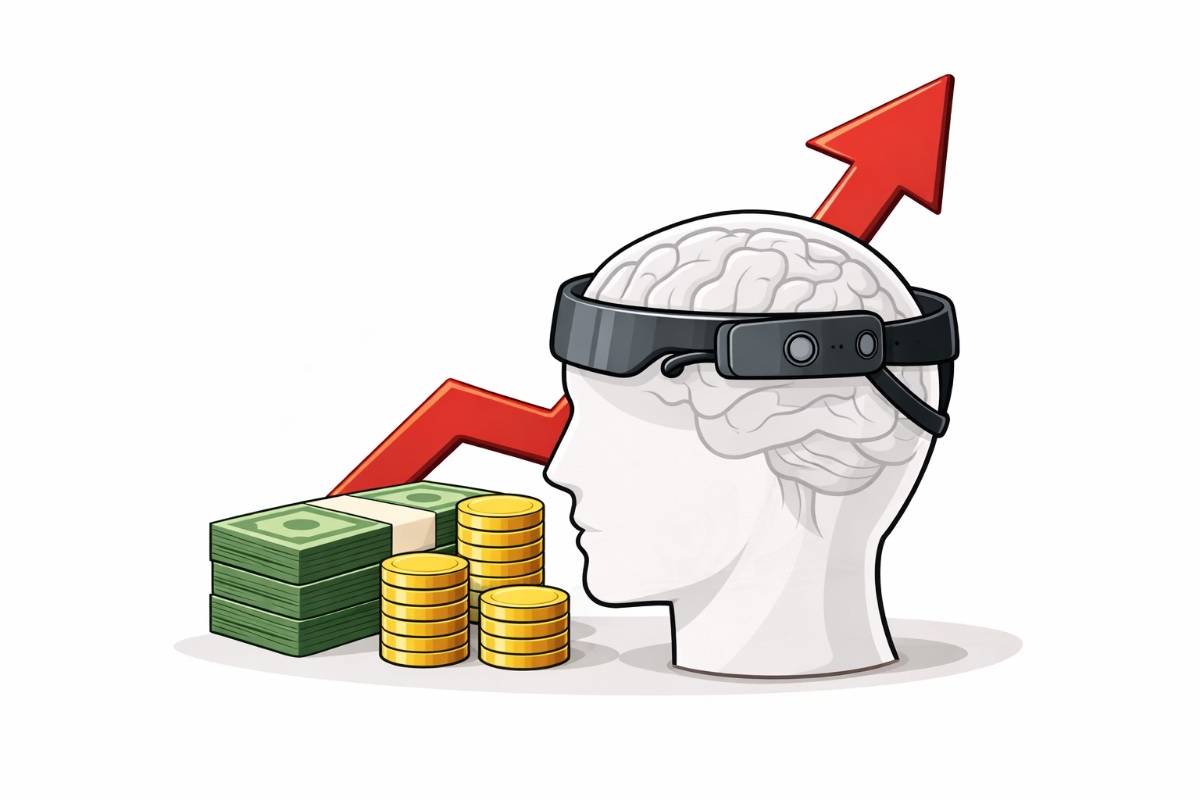
Temple is a wearable technology company founded by Deepinder Goyal that aims to build a device capable of measuring cerebral blood flow the flow of blood within the brain in real time.
The device under development is designed to sit near the wearer’s temple on the head and continuously track brain-related health metrics. According to industry reports, Temple’s technology targets insights into brain function that existing wearables like smartwatches or fitness bands currently cannot monitor.
Goyal has described this as an effort to deepen understanding of how the brain responds during elite physical performance, mental stress, and recovery, especially in athletes and high-performance users.
Breakdown of the $54M Funding Round
Strong Early-Stage Confidence
Temple’s $54 million round is notable because it was raised in a friends-and-family funding round, rather than a traditional institutional seed or Series A.
Key points about the funding:
- Total raised: $54 million (~₹490 crore)
- Post-money valuation: ~$190 million (~₹1,700 crore)
- Investors: Founder friends, early Zomato backers, more than 30 Temple employees invested at the same valuation.
Institutional participation is also reported from prominent firms including Steadview Capital, Peak XV Partners, InfoEdge Ventures, and Dharana Capital, among others.
Employee participation with staff investing their own capital at full valuation signals strong internal belief in the mission.
Why This Funding Round Is Significant
1. Unusual Size for Early Stage
A $54 million friends-and-family round is exceptionally large by Indian startup standards, especially for a pre-product company. Most early-stage funding rounds are far smaller, even for promising tech startups.
This reflects both the credibility of Deepinder Goyal as a founder and the investor confidence in his vision for neurotechnology wearables.
2. Shift From Food Tech to Deep Tech
Goyal’s return to tech through Temple comes shortly after he stepped down as CEO of Zomato and its parent company Eternal in early 2026. His exit marked the end of nearly two decades in the food delivery and quick commerce space.
Temple signals a deeper focus on health technology and neuroscience, a domain that combines hardware engineering, data science, and human physiology.
3. Investor and Talent Confidence
Having more than 30 employees invest personally at valuation parity is rare at this stage and indicates exceptional internal backing.
This wave of confidence from early backers, founders, and employees underlines widespread belief in Temple’s long-term potential.
What Temple’s Wearable Aims to Do
Unlike traditional fitness trackers that measure heart rate, sleep, or steps, Temple’s device is being designed to:
- Track cerebral blood flow continuously
- Offer real-time insights into brain activity
- Help athletes and high-performance individuals monitor mental and physical strain
- Provide data that could influence recovery and training decisions
The approach represents a more advanced class of biometric monitoring, moving beyond standard metrics like heart rate or skin temperature.
Industry Context: Why Brain Wearables Matter
As technology advances, wearable devices are expanding rapidly beyond fitness tracking into deeper health metrics that were once available only in medical settings.
Companies like Whoop, Oura, and Garmin have created mainstream wearables focused on fitness and wellness. Temple’s focus on brain-centric data positions it in a niche yet strategic category that bridges health tech and performance optimization an area with increasing interest from athletes, researchers, and wellness professionals.
Temple’s Growing Team and Hiring Plans
Temple has publicly announced a hiring push to build out its engineering and science teams, spanning areas such as:
- Embedded systems
- Computational neuroscience
- Brain-computer interface engineering
- Neural decoding and AI systems
These hires suggest Temple aims to blend hardware, neuroscience, and advanced software to bring its vision to life.
Challenges and Next Steps
Despite the strong funding and mission, Temple faces several challenges that are common in advanced wearable tech:
- Technology validation: Measuring cerebral blood flow non-invasively and accurately is technically demanding.
- Regulatory pathway: Wearables with health-impact claims may require rigorous testing and approvals.
- Market adoption: Users must be willing to adopt a device worn on the head.
Temple has not announced a commercial launch date. Early product development, testing, and validation will likely take significant time, given the complexity of neuro-monitoring technology.
What This Means for Indian Tech and Startups
Deepinder Goyal’s investment in Temple highlights a broader shift in the Indian startup ecosystem, where founders are pushing toward:
- Deep technology and hardware innovation
- Health and wellbeing tech that intersects science and consumer products
- Ambitious projects that may take years to mature
Temple’s funding round also sends a signal to global investors that high-performance wearable tech and neuroscience innovation can originate from India.
Key Highlights at a Glance
- $54 million raised in Temple’s first funding round.
- Temple valued at ~$190 million (~₹1,700 crore) post funding.
- Investors include founder circles, early Zomato backers, Steadview Capital, and Peak XV.
- Over 30 Temple employees invested their own capital.
- Temple aims to build a brain-monitoring wearable, tracking cerebral blood flow.
Why This Update Matters Today
Deepinder Goyal’s Temple is more than another startup funding story. It reflects a strategic leap into complex health technology a space that combines engineering, neuroscience, and huge potential for future impact.
For Indian entrepreneurs and investors, Temple’s funding success signals increasing appetite for deep tech that challenges conventional categories.
For global tech observers, it marks India as a potential hub for advanced wearable innovation beyond consumer fitness into brain and health science.
This funding round will likely be watched closely by investors, founders, athletes, and technology enthusiasts across India and around the world.
Disclaimer: The information presented in this article is intended for general informational purposes only. While every effort is made to ensure accuracy, completeness, and timeliness, data such as prices, market figures, government notifications, weather updates, holiday announcements, and public advisories are subject to change and may vary based on location and official revisions. Readers are strongly encouraged to verify details from relevant official sources before making financial, investment, career, travel, or personal decisions. This publication does not provide financial, investment, legal, or professional advice and shall not be held liable for any losses, damages, or actions taken in reliance on the information provided.
Last Updated on Monday, March 2, 2026 5:30 am by Startup Newswire Team