


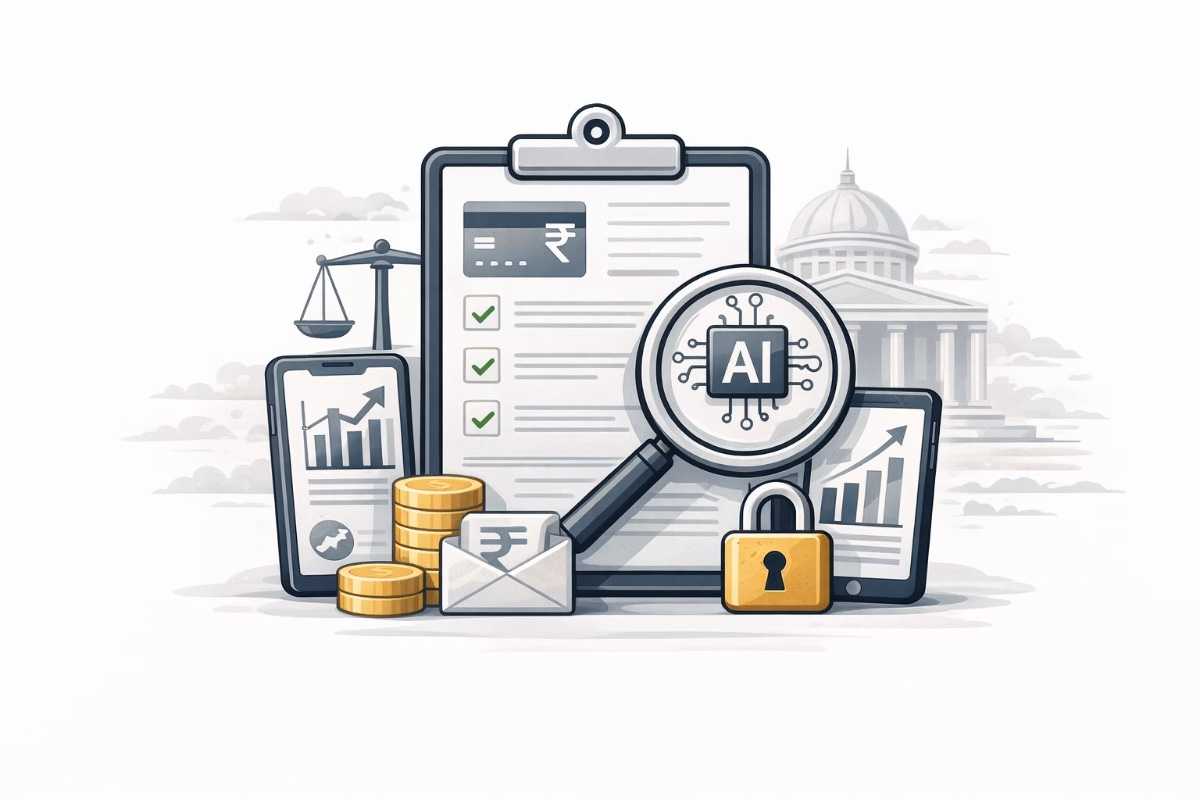
The Reserve Bank of India has tightened regulations on fintech lending platforms, signaling a major shift in how digital loans will be offered, processed, and monitored in the country.
The new rules aim to protect borrowers, improve transparency, and bring stronger discipline to a fast-growing sector that has seen both rapid innovation and rising complaints.


For Indian consumers, startups, and lenders, this move reshapes the future of digital lending at a time when app-based loans have become common across cities and small towns.
Why RBI’s Action Matters Today
Fintech lending has grown faster than regulation in recent years.
Instant loans, buy-now-pay-later products, and app-based credit have expanded access to finance, but they have also raised concerns around high interest rates, hidden charges, data misuse, and aggressive recovery practices.
By tightening norms, the Reserve Bank of India is seeking to restore trust and stability without stopping innovation.
What Triggered the Regulatory Push
The RBI has repeatedly flagged risks in the digital lending ecosystem.
These include:
- Loans disbursed without proper credit checks
- Use of unregulated third-party apps
- Lack of clarity on interest rates and fees
- Complaints of harassment during recovery
Rising consumer grievances and systemic risks prompted the central bank to act decisively.
Who the New Rules Apply To
The tighter regulations apply to fintech lending platforms, NBFCs, and banks that use digital channels to offer loans.
They also cover lending service providers that act as intermediaries between borrowers and regulated lenders.
The RBI has made it clear that responsibility for compliance rests with regulated entities, not just the technology platforms.
Key Changes Introduced by the RBI
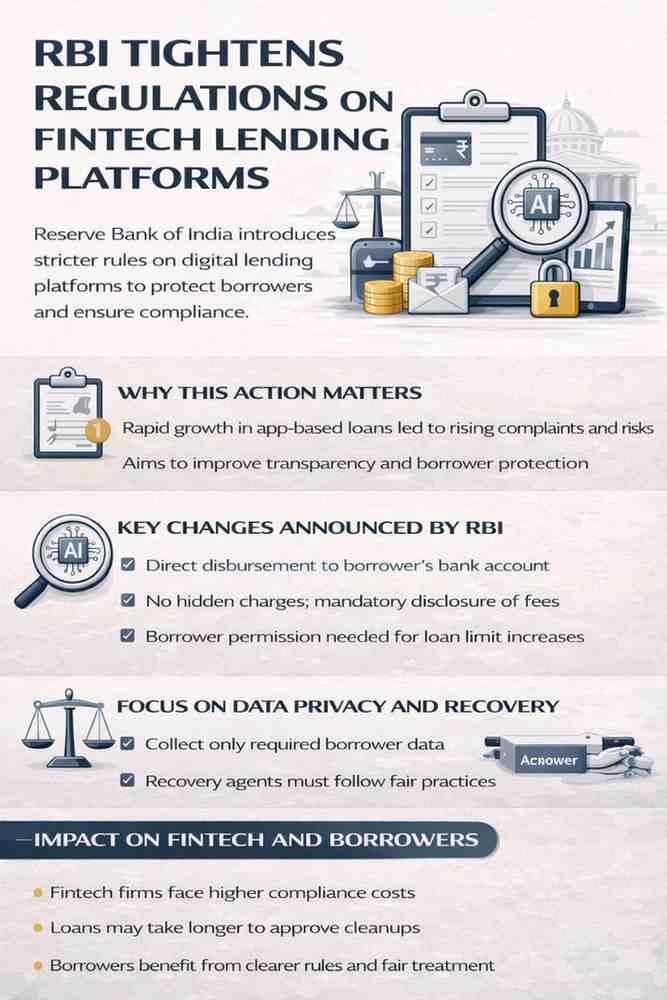
Direct Loan Disbursement to Borrowers
Loans must now be disbursed directly into the borrower’s bank account.
Funds cannot be routed through fintech platforms or third-party wallets.
This change improves traceability and reduces the risk of misuse.
Mandatory Transparency on Loan Terms
All charges must be clearly disclosed upfront, including:
- Interest rate
- Processing fees
- Penalties
- Recovery costs
Borrowers must know exactly how much they are paying before accepting a loan.
No Automatic Credit Line Increases
Fintech platforms cannot increase loan limits without explicit borrower consent.
Silent or automatic upgrades are no longer allowed.
Cooling-Off Period for Borrowers
Borrowers must be given a cooling-off or look-up period, during which they can exit a loan without penalty.
This step is meant to prevent impulsive borrowing.
Stricter Rules on Data Privacy
Data protection is a major focus of the new framework.
Fintech lenders can collect only data that is necessary for loan processing.
They must:
- Seek clear user consent
- Avoid accessing contacts or personal media
- Store data securely
- Delete data once the purpose is met
This addresses growing concerns about misuse of personal information.
Recovery Practices Under RBI Scanner
Aggressive recovery methods have been one of the most criticised aspects of digital lending.
Under the tightened rules:
- Recovery agents must follow fair conduct norms
- Harassment and intimidation are prohibited
- Borrowers must have access to grievance redressal
The RBI has warned that violations will invite strict action.
Impact on Fintech Companies
Fintech lending platforms will need to redesign business models.
Many platforms that relied on fast approvals and minimal disclosures will face higher compliance costs.
Some smaller players may struggle to meet regulatory standards, leading to consolidation in the sector.
However, compliant and well-capitalised firms may benefit from increased trust and long-term stability.
Impact on Banks and NBFCs
Banks and NBFCs partnering with fintech firms are now under greater scrutiny.
They must ensure that:
- Partner platforms follow RBI rules
- Customer experience remains compliant
- Lending decisions are accountable
The RBI has placed clear responsibility on regulated lenders, even if technology partners are involved.
What This Means for Borrowers
For borrowers, the changes are largely positive.
Key benefits include:
- Clear loan terms
- Better data protection
- Fair recovery practices
- Reduced risk of hidden charges
While loan approvals may take slightly longer, the process is expected to be safer and more transparent.
Will Credit Become Harder to Get
In the short term, some borrowers may find it harder to get instant loans.
Fintech firms are likely to strengthen checks and slow down approvals to meet compliance needs.
Over time, however, experts believe the system will become healthier, with credit flowing to borrowers who can genuinely repay.
How This Fits into RBI’s Broader Strategy
The RBI has been steadily tightening oversight of new-age financial products.
From digital lending to buy-now-pay-later schemes, the focus has been on:
- Consumer protection
- Systemic stability
- Responsible innovation
The latest move reinforces the central bank’s message that technology cannot bypass regulation.
Industry Reaction So Far
Industry responses have been mixed.
Some fintech firms have welcomed the clarity, saying it will help build sustainable businesses. Others have expressed concern about higher costs and slower growth.
Most agree, however, that clearer rules were needed to clean up the sector.
What Happens If Platforms Don’t Comply
The RBI has made it clear that non-compliance will not be tolerated.
Possible actions include:
- Penalties
- Restrictions on operations
- Cancellation of partnerships
- Regulatory bans
This raises the stakes for platforms operating in grey areas.
Global Context: India Joins a Wider Trend
Globally, regulators are tightening oversight of digital lending.
Countries across Asia, Europe, and the US have introduced stricter rules on data use, disclosures, and recovery practices.
India’s move aligns with this global shift towards safer fintech ecosystems.
What Comes Next
The RBI is expected to monitor implementation closely.
Further clarifications, inspections, and enforcement actions may follow as the rules are rolled out on the ground.
Fintech firms will need to invest in compliance, legal frameworks, and customer education.
Why This Is a Turning Point for Fintech Lending
The tightening of rules marks the end of unchecked growth in digital lending.
Fintech platforms are now firmly within the regulatory framework, on par with traditional lenders.
This shift could redefine trust, sustainability, and accountability in India’s credit market.
Bottom Line
RBI’s tighter regulations on fintech lending platforms aim to protect borrowers while strengthening the financial system.
Though the changes may slow down instant lending, they promise a more transparent and responsible ecosystem.
For India’s fintech sector, this is a moment of correction, not contraction, one that could lay the foundation for long-term growth built on trust and compliance.
Disclaimer: The information presented in this article is intended for general informational purposes only. While every effort is made to ensure accuracy, completeness, and timeliness, data such as prices, market figures, government notifications, weather updates, holiday announcements, and public advisories are subject to change and may vary based on location and official revisions. Readers are strongly encouraged to verify details from relevant official sources before making financial, investment, career, travel, or personal decisions. This publication does not provide financial, investment, legal, or professional advice and shall not be held liable for any losses, damages, or actions taken in reliance on the information provided.
Last Updated on Tuesday, February 10, 2026 6:55 am by Startup Newswire Team